
Description
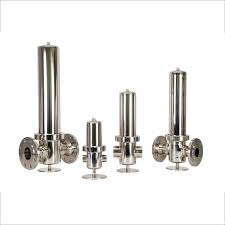
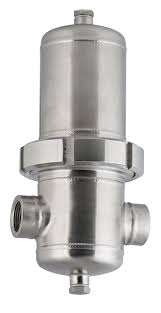
Process filtration — For Air, Gas, Water & Steam with Stainless steel (SS) housing:
1) Why process filtration matters
Process filtration protects product quality, ensures regulatory/sterile requirements, reduces equipment wear, prevents contamination of downstream systems and improves operational uptime. For compressed air and technical gases, contaminants (particulates, oil aerosols, liquid water, vapour, and chemicals) become concentrated during compression and must be removed before use. The same principle applies for steam (protect products from condensate/particles and microbiological contamination) and water (remove suspended solids, colloids, microbes and dissolved contaminants to protect process equipment or meet product specs).
2) Typical contaminants by medium
- Compressed air & technical gases: solid particles (rust, pipe scale, dust), liquid aerosols (oil/mist), condensate (liquid water), oil vapour and chemical vapours, microbes.
- Water (process/utility): suspended solids, colloids, turbidity, dissolved organics, hardness ions, microorganisms (bacteria, cysts), trace chemicals.
- Steam: entrained particulates, condensate droplets, corrosion products, dissolved minerals that precipitate on cooling, and potential microbial concerns where steam contacts product.
3) Core filtration technologies and how they work
A. Mechanical / depth filters (particulate)
- Multi-layer depth media trap particles through a tortuous path; high dirt-holding capacity and long service life for coarse-to-fine particle removal. Common for both air/gas and water pre-filtration.
- Used as first stage to protect coalescing or membrane elements.
B. Coalescing filters (air & gases)
- Remove liquid aerosols (oil/water) plus fine particulates by coalescing small droplets into larger ones which then drain away. These filters are widely used in compressed air/gas systems and can achieve very high removal efficiencies for aerosols and particles. In industrial compressed-air applications, coalescing elements are available with validated retention down to the sub-micron range (values reported as low as 0.01 µm for oil/aerosol retention in technical datasheets).
C. Pleated / high-surface filters
- Pleated media increase surface area for lower differential pressure at a given flow and longer service life; often used where low pressure drop is critical. Advanced pleat geometries are used to reduce energy cost across the element.
D. Adsorption (activated carbon)
- For removal of oil vapour, hydrocarbons, odors and trace chemical vapours from air/gas streams. Often placed after coalescing and particulate stages to polish the gas. (Used in breathing-air or instrument-air polishing.)
E. Membrane and micro/ultrafiltration (water and sterile air)
- Water: microfiltration/ultrafiltration remove bacteria and fine particulates; nanofiltration/reverse osmosis target dissolved ions and small organics.
- Sterile air/steam/liquid: membrane and sterile barrier filters used where sterility is required; housings and elements designed and validated for sterile service.
F. Steam filtration media
- Steam filters are manufactured to withstand high temperature and wet conditions; they remove particles and condensate droplets and may include hydrophobic membrane elements for sterile steam applications. Filtration housings and elements for steam are selected for temperature rating, condensate handling and material compatibility.
4) Typical filter train (compressed air / technical gas example)
- Inlet separator / cyclone — removes bulk liquid condensate by centrifugal action.
- Pre-filtration (coarse particulate) — protects downstream elements from large solids.
- Coalescing filter — removes oil/water aerosols and fine particulates.
- Adsorption (carbon) / vapor filter — removes oil vapour, odour, hydrocarbons.
- Dryer (refrigeration or adsorption) — reduces dew point (if dryness is required).
- Final/sub-micro filter / sterile filter — ensures required particulate or microbial purity before point of use.
This staged approach both protects expensive polishing media and achieves the required air/gas quality efficiently.
5) Performance metrics & standards to watch
- Particle size efficiency (e.g., removal to 0.01 µm for some coalescing elements in datasheets). Use validated retention efficiency data for the specific element you plan to use when tight specs are needed.
- Compressed air quality class (ISO 8573-1) for particles, water and oil — frequently used to specify required air cleanliness. Filter and dryer combinations are specified to meet a target ISO class.
- Pressure drop (ΔP) across element/housing — impacts energy consumption. Low differential designs (e.g., advanced pleat/UltraPleat-style media) reduce operating cost and extend element life. Monitor ΔP to plan element change-out.
- Flow capacity and sizing — select housings and element grades for the maximum expected volumetric flow (examples in product literature show housings covering broad ranges, e.g., tens to >1,000 m³/h depending on model). Always apply correction for operating pressure, temperature and gas density.
6) Steam-specific considerations
- Temperature and material compatibility: steam filtration elements and housings must be specified for the operating temperature and any condensate chemistry (corrosivity).
- Condensate management: steam lines commonly form condensate — filters must allow effective drainage and must be installed with appropriate traps and piping to avoid water logging and microbial growth. Steam used in contact with food or medical products may require validated sterile filtration and documented integrity testing.
7) Water filtration (process-level guidance)
- Multi-stage approach: coarse screens → sand / multimedia → cartridge/membrane (micro/ultra/nano/RO) → adsorption (activated carbon) → disinfection (UV / chemical) when required.
- Material selection: select media and housings compatible with pH, chlorine or other treatment chemicals and temperature.
- Fouling control: pre-filtration and periodic backwash (for depth/multimedia filters) reduce fouling of membranes and prolong life.
- Validation & monitoring: measure turbidity, bacterial counts and specific ion concentrations depending on product specification.
8) Condensate & drain management (important for compressed air/gas)
- Proper condensate separation and drainage (auto drains, float drains, level sensors) is essential because accumulations cause re-entrainment and degrade downstream filtration. Install drains at separators, filter housings, dryers and receivers to maintain system dryness and prevent corrosion and microbial growth in condensate handling systems.
9) Maintenance, monitoring & lifecycle
- ΔP monitoring: install pressure gauges or differential pressure indicators at filter housings; replace elements based on ΔP trend or scheduled intervals. Some systems offer electronic indicators that estimate remaining element life.
- Scheduled replacement & spares: keep replacement elements and drain components in inventory to avoid unscheduled downtime.
- Integrity testing for sterile filters: for sterile air/steam/liquid filters, perform documented integrity tests and follow validation protocols appropriate to the industry.
10) Selection checklist (practical)
- Define the medium (air/gas/water/steam), max flow (actual at operating pressure/temperature), operating pressure and temperature.
- Specify target cleanliness (ISO classes for air, particle size / turbidity / microbial limits for liquids/steam).
- Identify main contaminants to remove (oil aerosol, vapour, particulates, microbes).
- Choose filter stages (separator → coalescer → dryer/adsorption → final polish).
- Check element performance sheets for validated retention efficiencies and allowable ΔP. Use correction factors for pressure/temperature where provided.
- Confirm materials, certifications (food/medical where needed), and maximum temperature for steam service.
- Include condensate management and monitoring plan (drains, ΔP gauges, service schedule). (Omega Air)
11) Example technical notes (typical values from technical literature)
- Coalescing elements: validated retention efficiencies for oil aerosols down to sub-micron sizes; use coalescing + adsorption for oil vapour removal if breathing/sterile air is required.
- Housings / flow ranges: industrial housings cover broad performance ranges (some product lines specify flows from ≈35 up to ≈1,100 m³/h depending on size). Match housing size to flow and service pressure.
- Pleated media benefit: modern pleat designs reduce differential pressure and extend element life, lowering energy consumption and cost of ownership.
12) Final recommendations
- Use a staged filtration strategy tailored to the contaminant profile — coarse removal first, then coalescing/adsorption and final polish.
- Size for actual operating conditions (pressure, temperature, gas density) and verify flow/ΔP curves from the element datasheet.
- Implement condensate drainage and ΔP monitoring as standard practice; schedule element changes by ΔP or validated service intervals.
- For sterile or food/medical applications choose elements and housings rated for steam/sterile service and include validated integrity testing.
Steam Filters with Stainless Steel Housing (Food & Pharma Grade)
Our steam filters with stainless steel housings are designed for food, beverage, and pharmaceutical applications, ensuring clean, dry, and contaminant-free steam at all process stages. Constructed from high-grade stainless steel (SS 304 / SS 316L), these filters provide excellent corrosion resistance and withstand high temperatures and pressures. They effectively remove particulates, condensate, and rust from steam lines, protecting downstream equipment and maintaining product purity. Available in sanitary design with hygienic connections, these filters meet the strict cleanliness and safety standards required in the food and pharma industries.
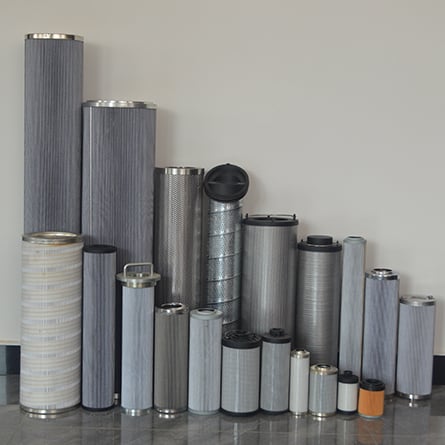
Replacement Filter List (For Air, Gas, Steam & Water) With Stainless Steel (SS) Housing:
| Replacement Filter of ABAC | Replacement Filter of AGRE | Replacement Filter of AIRFILTER ENGINEERING |
| Replacement Filter of ALMIG | Replacement Filter of ALUP | Replacement Filter of ATLAS COPCO |
| Replacement Filter of ATS | Replacement Filter of BALMA | Replacement Filter of BEA |
| Replacement Filter of BEKO | Replacement Filter of BOGE | Replacement Filter of CECCATO |
| Replacement Filter of CHAUMECA | Replacement Filter of CHICAGO PNEUMATIC | Replacement Filter of CKD |
| Replacement Filter of COMPAIR | Replacement Filter of CREEMERS | Replacement Filter of CTA |
| Replacement Filter of DELTECH | Replacement Filter of DOMNICK HUNTER | Replacement Filter of DONALDSON |
| Replacement Filter of EKOMAK | Replacement Filter of FIAC | Replacement Filter of FINITE |
| Replacement Filter of FUSHENG | Replacement Filter of HANKISON | Replacement Filter of HIROSS |
| Replacement Filter of HITACHI | Replacement Filter of INGERSOLL RAND | Replacement Filter of KAESER |
| Replacement Filter of KOBELCO | Replacement Filter of KSI | Replacement Filter of MARK |
| Replacement Filter of MATTEI | Replacement Filter of MAUGUIERE | Replacement Filter of MIKROPOR |
| Replacement Filter of NANO PURIFICATION | Replacement Filter of OMI | Replacement Filter of ORION |
| Replacement Filter of PNEUMATECH | Replacement Filter of PX | Replacement Filter of PUSKA |
| Replacement Filter of QUINCY | Replacement Filter of SCHNEIDER | Replacement Filter of SMC |
| Replacement Filter of SPX | Replacement Filter of SULLAIR | Replacement Filter of WALKER |
| Replacement Filter of WORTHINGTON CREYSSENSAC | Replacement Filter of ZANDER | Replacement Filter of JORC |
| Replacement Filter of BEKO | Replacement Filter of WORTMANN |
Alternative Filter Housings and Elements
Replacement Filter Housing of JORC
Replacement Filter Housing of BEKO
Replacement Filter Housing of WORTMANN
Replacement Filter Housing of KAESER
Replacement Filter Housing of ATLAS COPCO
Replacement Filter Housing of OMI
Desiccant Dryer Cartridges & Service Kits
Replacement Desiccant Cartridge of DONALDSON
Replacement Desiccant Cartridge of HANKISON
Replacement Desiccant Cartridge of MIKROPOR
Replacement Service Kit of DONALDSON
Replacement Service Kit of HANKISON
Replacement Service Kit of MIKROPOR

Reviews
There are no reviews yet.